
Fencing marks and secures the boundary of your garden. Most UK garden fences use timber panels or closeboard (vertical featheredge boards fixed to rails) between timber or concrete posts, with a gravel board at the bottom to keep the timber off the soil. Gates are made in the same styles for side access, and in wider pairs for driveways.
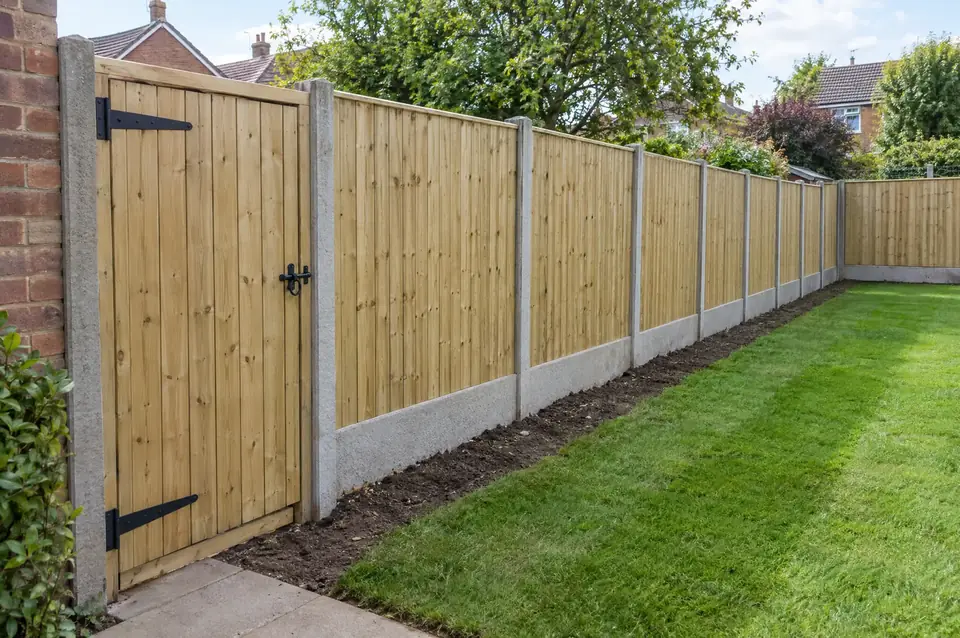
Fences usually fail at the posts. Timber posts rot at ground level, panels catch the wind like sails, and after a stormy winter a whole run can lean or come down. Replacing a fence is a good time to change how it's built: concrete posts and gravel boards don't rot, and closeboard stands up to wind better than lightweight panels. We'll look at your garden's exposure and soil before recommending a type.
A fence also sits on a boundary, so it involves your neighbours as much as you. Before we start, it's worth knowing who owns the fence, where the boundary runs and how tall you can go without planning permission. We'll talk through these at survey, and we can work with you and your neighbour to agree a shared replacement if that suits everyone.
Which options suit your home?
Panel fencing
Pre-made timber panels, usually 1.83 m wide, slotted between posts. Lap, overlap and slatted panels are quick to fit and the most affordable option. They suit sheltered gardens best. In exposed spots, lightweight panels can rattle or blow out, so heavier panels or closeboard are a better choice there.
Closeboard fencing
Vertical featheredge boards nailed to horizontal rails fixed between posts, built in place along the boundary. Closeboard is stronger than panels, copes better with wind and can follow sloping ground more neatly. Damaged boards can be replaced one at a time. It costs more and takes longer to build, but it lasts longer in most gardens.
Concrete posts and gravel boards
Slotted concrete posts hold panels in place without rotting, and concrete gravel boards along the bottom keep timber clear of wet soil. Concrete posts are heavier to install and more noticeable than timber. Many people put them in when replacing panel fences, because new panels can then be slotted in later without disturbing the posts.
Slatted and composite fencing
Horizontal slatted timber gives a modern look and lets some air and light through, which suits contemporary gardens. Composite fencing, made from wood fibre and plastic, doesn't need painting or treating and won't rot. Both cost more than standard fences, and composite systems have their own posts and fixings.
Side gates and driveway gates
Side gates add security to the path at the side of the house, and driveway gates in timber or metal close off the front. Gates need strong posts, hinges and latches, and wide gates need drop bolts or a centre stop. Driveway gates shouldn't open outwards over the pavement, so they're hung to open inwards.
What's included when SKJ does the work?
- Free survey, including the boundary line, ground conditions and wind exposure
- Removal and disposal of the old fence, posts and concrete
- New posts set in concrete, or slotted concrete posts
- Concrete or timber gravel boards along the base
- Panels or closeboard in pressure-treated timber, or your chosen alternative
- Gates hung with hinges, latches and drop bolts where needed
- Fences stepped or raked neatly to follow sloping ground
- Clear-up of the work area and removal of all waste
How much does a fence or gate cost?
Guide prices run from £60 to £230 per linear metre. 1.8 m closeboard fence with concrete posts and gravel boards, old fence removed: typically £95 – £135 per linear metre.
| Option | Guide price | Good to know |
|---|---|---|
| Panel fencing with concrete posts | £60 – £95 per linear metre | 1.8 m panels, quick to fit |
| Closeboard with concrete posts | £90 – £135 per linear metre | Stronger, better in exposed gardens |
| Slatted or composite fencing | £140 – £230 per linear metre | Contemporary look, less upkeep |
Usually included: Survey, removal and disposal of the old fence, posts set in concrete, gravel boards, panels or boards, fixings and clear-up.
Usually extra: Gates (priced individually), staining or painting, removing large tree roots or old walls, retaining work on steep slopes and boundary surveys.
Guide ranges are the total a homeowner would expect to pay, including VAT where it applies. Your fixed price comes after a free survey.
What changes the price?
- Length and height of the fence
- Fence type: panels, closeboard, slatted or composite
- Timber or concrete posts and gravel boards
- Removal and disposal of the old fence and post concrete
- Ground conditions, slopes, roots and buried services
- Number and size of gates, and hardware such as locks
How does the job run, start to finish?
- Survey and boundary checkWe walk the boundary with you, measure the runs and note slopes, trees, sheds and shared walls. We'll ask about ownership and the neighbours, and check height limits if the fence is next to a road or pavement.
- Quote and materialsYour written quote lists the fence type, height, post type, gravel boards, gates and removal of the old fence. Once you approve it, we order the materials and agree a date that suits you and, if needed, your neighbour.
- Take down the old fenceOld panels and posts come out, including the concrete around the post bases where possible. If buried services, roots or old foundations get in the way, we'll talk to you before deciding how to deal with them.
- Set the postsPosts are set in concrete to line and level, at the right spacing for the panels or rails. Concrete needs time to firm up, so posts are braced while it sets, and gravel boards go in at the base.
- Fit panels, boards and gatesPanels are slotted in or closeboard is built on the rails, stepped or raked to follow the ground. Gates are hung and adjusted so they close and latch properly, and the area is cleared and tidied.
Timescale: Most garden fences take 1–3 days, depending on length, post type and gates.
Planning, Building Regulations and approvals
How high can a fence be without planning permission?
Under permitted development, a fence, wall or gate can be up to 2 m high, but only 1 m high where it's next to a road used by vehicles or the footpath beside one. An existing fence that's already taller can normally be repaired or altered, as long as it isn't made any higher. If you plan to add trellis on top, treat it as part of the height and check with the council first. Listed buildings, Article 4 directions and planning conditions on open-plan estates can tighten these limits.
Who owns the fence, and does the Party Wall Act apply?
Ownership isn't fixed by which way a fence faces. Check your title plan and deeds, which sometimes mark responsibility with a T symbol, and talk to your neighbour before removing a shared fence. The Party Wall etc. Act 1996 covers masonry walls on the boundary, but not timber fences. Posts and footings should stand on your own side, and covenants in your deeds may set rules on fence heights or styles.
Fencing and gates: your questions answered
How much does a new fence cost?
In the West Midlands, panel fencing with concrete posts usually costs around £60–£95 per metre fitted, and closeboard with concrete posts around £90–£135 per metre, including removal of the old fence. A 20 m run of closeboard therefore typically costs about £1,900–£2,700. Side gates usually add £200–£550 each, and driveway gates more.
How long does it take to replace a fence?
Most garden fences take one to three days, depending on length, post type and how hard the old posts are to remove. Closeboard takes longer than panels because it's built in place. Post concrete needs time to firm up before panels are fully loaded, which we allow for in the programme.
Do I need to tell my neighbour about a new fence?
It's not usually a legal requirement for a fence on your own land, but it's good practice and avoids disputes. If the fence is shared or ownership is unclear, agree the work in writing first. We may need access to their side for a short time, so a quick conversation before we start helps.
Concrete or timber posts: which is better?
Concrete posts don't rot, so they usually outlast timber posts, and new panels can be slotted in later without replacing them. Timber posts look softer and suit closeboard and some gate posts, but they eventually rot at ground level. In exposed gardens, concrete posts with closeboard or heavy panels are the most robust choice.
What guarantee comes with a new fence?
The panels, posts and treated timber carry their manufacturers' guarantees, and the terms for your fence are set out in your quote. Treated timber guarantees often depend on how cuts are treated and how the timber is used, so it's worth reading those conditions. Keep your quote and paperwork in case you need them later.
What should I do before the fence goes up?
Clear plants, pots and sheds back from the boundary by about a metre if you can, and lift anything you want to keep. Talk to your neighbour about access and the work. If you know where drains, cables or pipes run near the boundary, tell us at survey.
Which areas do we cover for fencing and gates?
We cover the whole West Midlands from West Bromwich. Pick your area for local details, councils and postcodes:
- Fencing and gates in Sandwell
- Fencing and gates in Birmingham
- Fencing and gates in Dudley
- Fencing and gates in Walsall
- Fencing and gates in Wolverhampton
- Fencing and gates in Solihull
- Fencing and gates in Coventry
- Fencing and gates in Staffordshire
- Fencing and gates in Worcestershire
- Fencing and gates in Warwickshire