
A flat roof is a roof with a very shallow fall, usually between 1:40 and 1:80, so rainwater runs off to a gutter or outlet. It's covered with a continuous waterproof layer such as EPDM rubber, GRP fibreglass or built-up felt, laid over a timber deck. Flat roofs are common on rear extensions, garages, dormers and bay window tops.
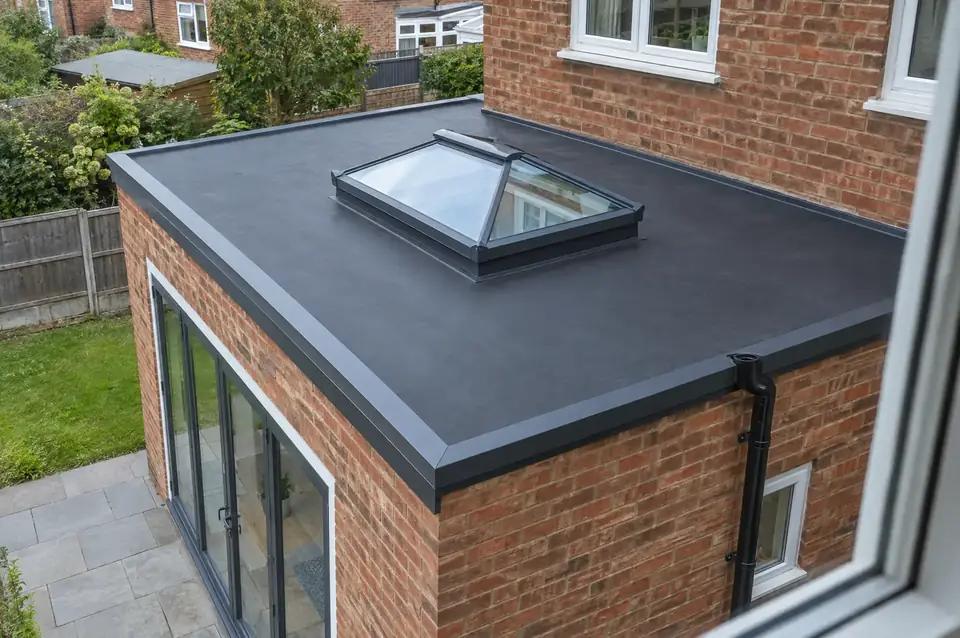
Flat roofs have a poor reputation because older felt roofs often failed within 10 to 15 years, leaking into kitchens and garages. Modern materials last much longer when laid properly. The membrane itself is only part of it: the deck must be sound, the fall must take water away, and the edges, upstands and outlets need careful detailing. Most flat-roof leaks start at an edge or a joint, not in the middle of the roof.
Replacing an old flat roof is also a chance to insulate it. Many extension roofs from the 1970s and 80s have little or no insulation, which is why rooms under them feel cold. When more than half of a flat roof is replaced, the regulations normally expect the insulation to be brought up to date, and a warm-roof build-up with insulation above the deck is usually the most reliable way to do it.
Which options suit your home?
EPDM rubber roof
A single sheet of synthetic rubber bonded to the deck, often in one piece with no joints on smaller roofs. EPDM handles temperature changes well, is quick to lay and needs little maintenance. It's a good all-round choice for garages and extensions, though it has a plain black finish and needs care around complex details.
GRP fibreglass roof
Glass-reinforced plastic laid as a liquid resin and matting over a board deck, which cures into a hard, joint-free, walkable surface. GRP works well on roofs with awkward shapes, roof lights and balconies, and comes in grey and other colours. It must be laid in dry conditions and needs a stable deck.
Torch-on felt
Modern reinforced bitumen membranes laid in two or three layers, bonded with heat. They're tougher and longer-lasting than old felt and suit roofs with lots of upstands and pipes. Felt is often the cheapest option, but it takes longer to lay and naked flames on site need extra fire precautions.
Warm-roof insulation upgrade
Rigid insulation boards are laid on top of the deck, under the new membrane, so the timbers stay warm and the risk of condensation drops. A warm roof raises the roof level slightly, which affects upstands, door thresholds and window cills. We check those details at survey before recommending it.
Roof lights and outlets
Flat roof lanterns and flat glass roof lights can be fitted or replaced at the same time as a new roof. Outlets, gutters and edge trims are renewed so water runs away cleanly. Getting the fall right during the deck replacement is the best way to stop water pooling, which shortens a roof's life.
What's included when SKJ does the work?
- Survey of the roof, deck, falls, edges and the ceiling below
- Strip-out and disposal of the old covering
- Deck repairs or replacement with new boarding, with firrings to correct falls where needed
- Warm-roof insulation where building regulations require it or you choose it
- EPDM, GRP or torch-on felt membrane laid to the manufacturer's method
- New edge trims, drip details, upstands and wall flashings
- Outlets and guttering connected so water drains away
- Building regulations notification or certification for full replacements, with the route named in your quote
How much does a flat roof cost?
Guide prices run from £1,300 to £7,500 depending on size and specification. Strip and replace a 20 m² rear extension roof in EPDM, with new deck and warm-roof insulation: typically £3,200 – £4,600.
| Option | Guide price | Good to know |
|---|---|---|
| Single garage roof | £1,300 – £2,600 | About 15–18 m², strip and re-cover |
| Rear extension roof | £2,400 – £5,200 | About 20–30 m², usually with insulation |
| Dormer or larger roof | £3,800 – £7,500 | Upper-floor access, scaffold and detailing |
Usually included: Survey, strip-out and waste, deck repairs or new decking as specified, membrane, edge trims, upstands and outlets, and building regulations certification for full replacements.
Usually extra: Replacing rotten joists, internal ceiling repairs and decorating, new roof lights or lanterns unless quoted, scaffold beyond simple access towers, and rerouting rainwater drainage.
Guide ranges are the total a homeowner would expect to pay, including VAT where it applies. Your fixed price comes after a free survey.
What changes the price?
- Roof area and shape, including upstands, roof lights and pipes
- Membrane choice: felt, EPDM or GRP
- Condition of the deck and joists once the old roof is stripped
- Insulation required under building regulations and its effect on levels
- Height and access, especially for dormers and upper-floor roofs
- Edge trims, gutters and outlets, and whether lead flashings need renewing
How does the job run, start to finish?
- Survey and diagnosisWe inspect the roof surface, edges, outlets and upstands, and check the ceiling below for stains or sagging. If it's leaking, we try to find the actual entry point, because a patch in the wrong place won't fix the problem.
- Specification and quoteYou get a written quote naming the membrane, the deck work, any insulation and trims, and how the work will be certified. If insulation will raise the roof level, we explain how the upstands and thresholds will be handled.
- Strip the old roofThe old covering is stripped and the deck exposed. Rotten boards are replaced, and any firrings needed to correct the fall are fitted. If we find hidden damage to joists, we stop and agree the repair with you in writing first.
- Insulate and deckFor a warm roof, a vapour control layer and rigid insulation boards go on, followed by the top deck. We aim to finish this stage in dry weather and keep the roof temporarily covered between days.
- Lay the membrane and detailsThe EPDM, GRP or felt is laid, then edges, upstands, flashings and outlets are finished. These details are where most flat roofs fail, so they get the most time and attention.
- Test and tidyWe run water across the finished roof to check it drains to the outlets without pooling, clear debris from gutters and drains, and remove all waste. You receive the membrane guarantee paperwork and the building regulations certificate where one applies.
Timescale: A garage roof usually takes 1–2 days; an extension or dormer roof usually takes 2–5 days in dry weather.
Planning, Building Regulations and approvals
Do I need building regulations approval to replace a flat roof?
Usually, if you're replacing the whole roof or a large part of it. The Building Regulations treat replacing a flat roof's waterproof membrane as renovation of a thermal element, while a new layer added purely as a repair doesn't count. Small repairs don't need an application. A full replacement is normally notified to building control or self-certified by a roofer registered with a competent person scheme such as CompetentRoofer, and the route is named in your quote.
Will I need to insulate the new flat roof?
Usually, yes. Under regulation 23, where more than 50% of a roof's surface is renovated, the whole roof should be upgraded to current standards where that's technically, functionally and economically feasible. Approved Document L's improved U-value for a renovated roof is 0.16 W/m²K, which typically means around 120–150 mm of rigid insulation in a warm-roof build-up. Where full depth isn't feasible, for example because of door thresholds, the best practical level is agreed with building control.
Do I need planning permission for a new flat roof?
Not normally. Replacing the covering on an existing flat roof, even with a different membrane, doesn't need planning permission. Changing a flat roof to a pitched roof, raising its height noticeably or creating a roof terrace or balcony usually does. Listed buildings and homes in conservation areas may face extra controls on materials and appearance, so we check these before finalising the specification.
Flat roofing: your questions answered
How much does a new flat roof cost?
In the West Midlands, re-covering a single garage roof usually costs around £1,300–£2,600, and a 20–30 m² extension roof around £2,400–£5,200, depending on the membrane, deck repairs and insulation. Dormer roofs cost more because of access. Your quote names the membrane and lists deck work and insulation separately.
Which lasts longer, EPDM or GRP?
Both last far longer than old felt when properly laid, and the quality of the installation matters more than the material. EPDM is flexible and handles movement well, while GRP gives a hard, walkable, joint-free finish that suits complex shapes. Manufacturers' expected lifespans vary by product, and the guarantee terms for your roof are set out in your quote.
How long does a flat roof replacement take?
A single garage roof usually takes one or two days, and an extension or dormer roof two to five days, depending on size, insulation and detailing. Flat roofing needs dry weather, especially GRP, so we may move a start date if heavy rain is forecast. The roof is kept covered overnight throughout.
Why does my flat roof leak when the surface looks fine?
Most leaks start at the edges, joints, outlets or where the roof meets a wall, not in the open middle of the roof. Water can also travel along the deck before it shows on the ceiling, so the stain may be a long way from the actual entry point. We check these details at survey before suggesting a repair or replacement.
What guarantee comes with a flat roof?
The membrane and related materials are covered by the manufacturer's guarantee, and the terms for your roof are set out in your quote. Some manufacturers' guarantees depend on the roof being installed to their specification and inspected, which is worth asking about. Keep the paperwork with your building regulations certificate.
How should I prepare for a new flat roof?
Clear the garage or room below of valuables in case of dust from the deck, and move cars if the skip or materials need the drive. Let us know about any satellite dishes, vents or pipes on the roof. If the roof is next to a neighbour's wall or boundary, a quick word with them about access helps.
Which areas do we cover for flat roofing?
We cover the whole West Midlands from West Bromwich. Pick your area for local details, councils and postcodes: