
A pitched roof is a sloping roof covered with tiles or slates laid over battens and a membrane on timber rafters. Pitched roofing work ranges from small repairs, such as replacing slipped tiles or re-fixing a ridge, through chimney and valley work, to a full re-roof where the old covering is stripped and replaced with new battens, membrane and tiles.
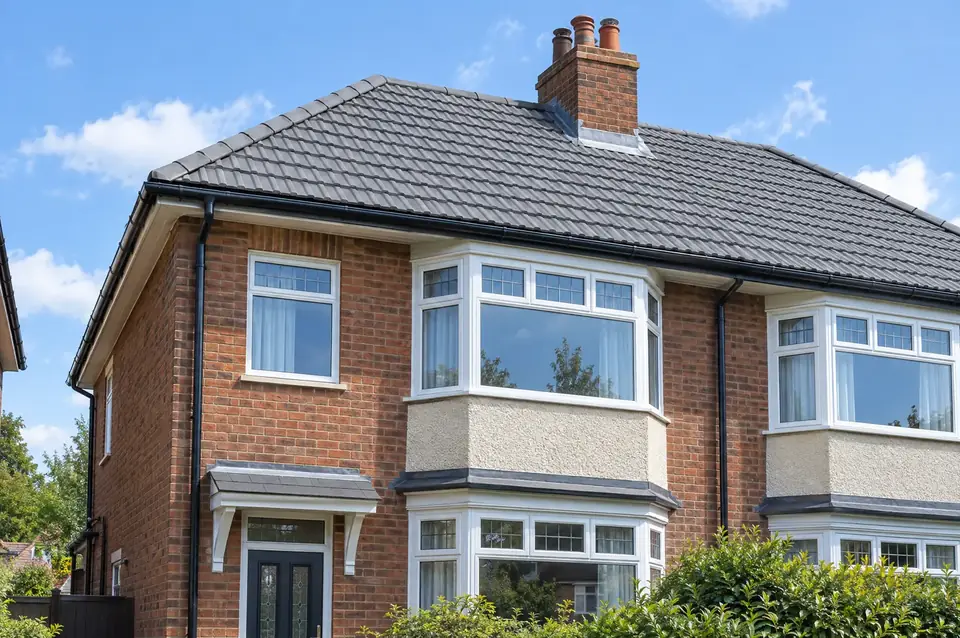
Most pitched roofs give warning before they fail: a few slipped tiles after a storm, a damp patch on a bedroom ceiling, mortar falling from the ridge or a chimney stack that's lost its pointing. Caught early, these are usually repairs rather than a new roof. We look at the roof from the ground, from a ladder or scaffold and from the loft, so you know what's actually wrong before you spend money.
When a roof has reached the end of its life, patching it becomes a false economy. Many post-war homes still have their original concrete tiles and bitumen felt from the 1950s to the 1970s, where the felt has perished and the nails have rusted. A full re-roof replaces the battens, membrane and tiles, sorts out ventilation and insulation, and gives the house a long-lasting roof again.
Which options suit your home?
Roof repairs
Replacing broken or slipped tiles, re-fixing loose verges, renewing lead flashings and tracing leaks. Repairs suit roofs that are mostly sound, with problems in one area. We use matching tiles where they're still made or reclaimed ones where they aren't, and we'll tell you honestly if repairs won't last.
Ridge and hip work
Ridge and hip tiles were traditionally bedded in mortar, which cracks and washes out over time. We can re-bed them in mortar with mechanical fixings, or convert to a dry-fix system that clips the tiles down without mortar. Dry-fix needs less maintenance and is now standard on new roofs.
Valley repairs
Valleys, where two roof slopes meet, carry a lot of water and are a common source of leaks. Old lead valleys can split, and mortar-bedded valley tiles can crack. We replace them with new lead to the correct code, or with a pre-formed GRP valley trough, and re-cut and fix the tiles either side.
Chimney work
Repointing brickwork, renewing the cement flaunching around the pots, fitting cowls or caps, and replacing the lead flashings where the stack meets the roof. If a chimney is no longer used, removing it below the roofline may be an option, though that involves structural checks and, on shared stacks, your neighbour.
Full re-roof
Stripping the old covering and replacing it with new treated battens, breathable membrane and tiles or slates, with dry-fix ridges and verges and new flashings. A re-roof is the time to fix ventilation, upgrade loft insulation and replace damaged timbers. It's usually notified to building control or self-certified by a registered roofer.
What's included when SKJ does the work?
- Roof inspection from outside and from the loft, with photos of what we find
- Scaffolding or safe access equipment appropriate to the job
- Removal and disposal of old tiles, battens and membrane
- New treated battens, breathable membrane and matching or chosen tiles
- Dry-fix or mechanically fixed ridge, hip and verge details
- New lead or approved flashings at chimneys, walls and valleys
- Roof ventilation detailed to suit the membrane and loft
- Building regulations notification or certification for re-roofs, with the route named in your quote
How much does a pitched roof cost?
Guide prices run from £200 to £14,000 depending on size and specification. Full re-roof of a three-bed semi in concrete interlocking tiles, with scaffold: typically £7,500 – £11,500.
| Option | Guide price | Good to know |
|---|---|---|
| Roof repairs | £200 – £1,200 | Slipped tiles, leaks and flashings |
| Ridge, valley or chimney work | £700 – £2,500 | Dry-fix ridge, new valley or chimney repairs |
| Full re-roof | £6,500 – £14,000 | Terrace or semi, stripped and re-covered |
Usually included: Inspection, scaffolding for full re-roofs, strip-out and waste removal, new battens, breathable membrane, tiles, dry-fix ridge and verge, standard flashings and building regulations certification.
Usually extra: Replacing rotten rafters or purlins, chimney rebuilding or removal, new fascias and gutters unless quoted, solar panel removal and refit, and loft insulation upgrades (priced as a separate line where required).
Guide ranges are the total a homeowner would expect to pay, including VAT where it applies. Your fixed price comes after a free survey.
What changes the price?
- Roof size, pitch and complexity, including hips, valleys and dormers
- Tile or slate choice, from concrete interlocking to clay or natural slate
- Scaffolding needs, including access over conservatories or extensions
- Condition of rafters, battens and any timber repairs found
- Chimneys, lead work and roof windows to work around
- Loft insulation and ventilation upgrades required under building regulations
How does the job run, start to finish?
- Roof surveyWe inspect the roof from outside, from a ladder where safe, and from the loft, looking at tiles, ridges, valleys, flashings, chimney and timbers. You get a clear explanation and photos, and we tell you whether repair or replacement makes more sense.
- Quote and approvalsYour written quote sets out the work, the tiles or materials, scaffolding and how the job will be certified. For a full re-roof we notify building control or use a competent person route before work starts.
- Scaffold and protectScaffolding goes up with edge protection, and we protect gardens, drives and conservatories below. For larger jobs, a skip or waste chute is arranged so debris doesn't land where it shouldn't.
- Strip and inspectOld tiles and battens are removed in sections so the roof is never left fully open. We check rafters and timbers once exposed and agree any repairs with you in writing before carrying them out.
- Re-cover and detailNew membrane, battens and tiles go on, with dry-fix ridges and verges, lead or approved flashings and ventilation. Loft insulation is topped up where the regulations require it as part of a re-roof.
- Clear up and sign offWe clear gutters of debris, check the finished roof from the scaffold, remove all waste and take the scaffold down. You receive before-and-after photos, the building regulations certificate where one applies, and the manufacturer's paperwork for the tiles and membrane.
Timescale: Repairs usually take a day or less; a full re-roof on a semi usually takes 1–2 weeks, depending on the weather.
Planning, Building Regulations and approvals
Do I need building regulations approval to re-roof my house?
Usually, yes, for anything more than a small repair. Re-covering more than about a quarter of a pitched roof is normally treated as controlled work, so it's either notified to building control or self-certified by a roofer registered with a competent person scheme such as CompetentRoofer. Approval is also needed if the new covering is significantly heavier (15% or more) or the structure changes. Like-for-like repairs to a small area don't normally need an application.
Will I have to improve the loft insulation?
Often. Under regulation 23, if more than half of a roof is renovated, the whole roof should be brought up to current thermal standards where that's technically, functionally and economically feasible. For a pitched roof, Approved Document L's improved value is a U-value of 0.16 W/m²K, which typically means around 270 mm of mineral wool at ceiling level. Ventilation must also be correct, to avoid condensation in the loft.
Do I need planning permission for a new roof?
Not normally. Re-covering a roof in similar-looking materials doesn't need planning permission. Changing the roof shape or height does, and in a conservation area or under an Article 4 direction, switching to a different-looking tile or slate may need consent. Listed buildings need listed building consent. Bats are legally protected, so if signs of bats are found, work pauses until a licensed ecologist has given advice.
Pitched roofing: your questions answered
How much does a new roof cost on a semi-detached house?
A full re-roof on a typical three-bed semi in concrete interlocking tiles usually costs around £7,500–£11,500 in the West Midlands, including scaffolding, strip-out, new battens, membrane, tiles and dry-fix ridges. Clay tiles or natural slate cost more. Rotten timbers, chimney work and insulation upgrades are priced as separate lines once we've seen the roof.
Repair or replace: how do I know which my roof needs?
A roof usually needs replacing when the problems are widespread rather than local: the old felt has perished, nails have rusted so tiles slip all over, or tiles are flaking and porous. If the issues are in one area, such as a valley, ridge or flashing, a repair is usually enough. We show you photos from the survey so you can see the condition yourself.
How long does a re-roof take?
A typical semi takes around one to two weeks, including scaffolding, stripping, re-covering and clearing up. Rain and high winds can add days, because we don't strip sections we can't cover safely. Repairs, ridge work and most chimney jobs take a day or two once access is in place.
Will my house be exposed to the rain during a re-roof?
No. We strip and re-cover the roof in sections, and each area is covered with new membrane before the end of the day. If heavy rain is forecast, we hold off stripping. There will be noise and some dust in the loft, so it's worth moving anything valuable stored up there.
What guarantee comes with a new roof?
The tiles, membrane and other materials come with the manufacturer's guarantee, and the terms for your roof are set out in your quote. You'll also receive the building regulations certificate or completion record for a re-roof, which a buyer's solicitor will ask about when you sell. Keep these with your house documents.
What should I do before the roofers arrive?
Clear the loft of valuables or cover them with dust sheets, and move cars from the drive if the scaffold or skip needs the space. Let your neighbours know about the scaffold, especially on a shared drive or terrace. If you have solar panels, satellite dishes or aerials on the roof, tell us at survey so we can plan for them.
Which areas do we cover for pitched roofing?
We cover the whole West Midlands from West Bromwich. Pick your area for local details, councils and postcodes: