
Plastering gives internal walls and ceilings a smooth, hard surface ready for decorating. A skim is a thin finishing coat over sound plaster or plasterboard; re-plastering means hacking off failed plaster and applying new backing and finish coats; dry lining fixes plasterboard to walls instead. Textured coatings such as Artex can be skimmed over or removed, after testing for asbestos.
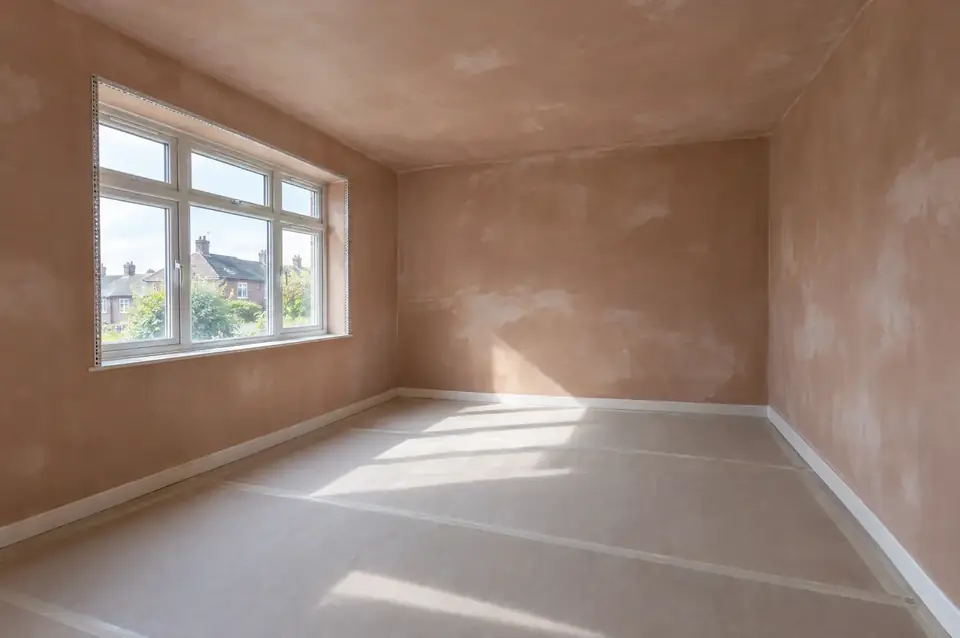
Cracked, bumpy or blown plaster makes even fresh paint look tired. Often the plaster is sound and only the surface is poor, so a skim coat is enough. Where plaster has come away from the wall, crumbles or has been damaged by damp, it needs cutting back and replacing. We tap-test and look closely at each wall, so you only pay for full re-plastering where it's actually needed.
Ceilings are a common job, particularly old Artex and textured ceilings from the 1960s to the 1990s. Before any textured coating is sanded, scraped or drilled, it needs testing, because many products made before 2000 contained a small amount of asbestos. A sealed, undamaged ceiling can usually be over-boarded or skimmed safely. We arrange the test first and plan the work around the result.
Which options suit your home?
Re-skim walls and ceilings
A thin finishing coat of plaster, a few millimetres thick, applied over existing sound plaster or board after a bonding coat or PVA. Skimming gives a smooth, flat surface ready for paint. It's the quickest and most affordable way to refresh a room, but it won't fix plaster that has come away from the wall.
Full re-plastering
Hacking off loose or damaged plaster back to brick or block, then applying a backing coat and finishing coat. Re-plastering is needed after damp, rewiring chases or where old lime plaster has failed. On older solid walls, a breathable lime plaster may be better than gypsum, especially where there's a history of damp.
Dry lining
Plasterboard fixed to the wall with adhesive dabs or onto a timber or metal frame, then skimmed. Dry lining is quicker to dry than wet plaster and gives a flat finish on uneven walls. Insulated plasterboard can improve cold external walls, though it reduces room size slightly and needs care around sockets and windows.
Ceilings and over-boarding
Cracked or sagging lath and plaster ceilings, and ceilings with failed textured coatings, can be over-boarded with new plasterboard screwed to the joists and skimmed. Over-boarding avoids the mess of pulling down an old ceiling. Where a ceiling is unsafe or the boards have failed, it's taken down and replaced instead.
Artex and textured coating removal
Textured coatings are tested for asbestos first. If none is found, they can be scraped, steamed or skimmed over. If asbestos is present, the safest option is usually to leave the coating undisturbed and over-board or skim it without sanding. Where removal is needed, it's done by suitably trained people under the Control of Asbestos Regulations 2012.
What's included when SKJ does the work?
- Free survey of walls and ceilings, including tap-testing for hollow plaster
- Asbestos sample testing of textured coatings before they're disturbed, analysed by an independent laboratory
- Protection of floors, furniture and fittings with dust sheets and boards
- Removal of loose plaster and coving, with waste taken away
- Bonding coats, scrim tape and beads at corners and joints
- Skim, backing coats, dry lining or over-boarding as specified
- Clean, smooth finish ready for a mist coat and decorating
- Advice on drying times before painting
How much does a plastering job cost?
Guide prices run from £220 to £1,900 per room. Re-skim the walls and ceiling of a medium bedroom of about 3.5 × 3 m: typically £650 – £950 per room.
| Option | Guide price | Good to know |
|---|---|---|
| Skim one ceiling | £220 – £450 per room | Sound ceiling, average-sized room |
| Skim walls and ceiling | £550 – £1,100 per room | Small to large room, plaster sound |
| Full re-plaster of a room | £850 – £1,900 per room | Hack off, backing coat and skim |
Usually included: Survey, protection, preparation, beads and tape, plastering to the method in your quote, clean-up and waste removal.
Usually extra: Asbestos testing fees (shown as a separate line), licensed asbestos removal if needed, electrical work, damp treatment, decorating, coving supply and replacing skirting or architrave.
Guide ranges are the total a homeowner would expect to pay, including VAT where it applies. Your fixed price comes after a free survey.
What changes the price?
- Room size and number of walls and ceilings
- Skim only, full re-plaster, dry lining or over-board
- Condition of the existing plaster and how much needs removing
- Asbestos testing results for textured coatings
- Height of ceilings, stairwells and access
- Removing and refitting coving, radiators and fittings
How does the job run, start to finish?
- Survey and testingWe check each wall and ceiling for hollow areas, cracks and damp, and note sockets, coving and radiators. If there's a textured coating, we arrange a sample test before quoting the method, so the price reflects a safe way of working.
- Quote and planYour written quote lists each room and the method: skim, re-plaster, dry lining or over-board. If radiators, switches or coving need taking off, that's included in the plan, and any electrics are handled by a qualified electrician.
- Protect and prepareFloors are covered, furniture is moved or sheeted, and fittings are removed. Loose plaster is hacked off, cracks are taped and beads are fixed at corners so the finish is straight and protected.
- PlasterBacking coats go on where needed, then the finish coat is applied, flattened and polished to a smooth surface. Ceilings are usually done before walls so drips and dust land on unfinished areas.
- Clean up and dryingWe clean up, remove waste and refit what we took off where practical. Fresh plaster must dry out fully before painting, which can take from a few days for a skim to several weeks for thick backing coats.
Timescale: A skim usually takes 1–2 days per room; full re-plastering takes 2–4 days, plus drying time before decorating.
Planning, Building Regulations and approvals
Is it safe to remove an Artex ceiling?
Only after it's been tested. Textured decorative coatings applied before 2000 may contain a small amount of asbestos, and you can't tell by looking. A sample should be analysed by an independent testing laboratory before the coating is sanded, scraped or drilled. Undamaged coatings can usually be left in place and over-boarded or skimmed. Removal is normally non-licensed work under the Control of Asbestos Regulations 2012, but it still needs trained operatives and controls, and larger jobs may be notifiable.
Does re-plastering need building regulations approval?
Not usually, for internal walls and ceilings. However, re-plastering or dry lining the inside of an external wall is renovation of a thermal element. Where more than 50% of that wall's surface is renovated, or more than 25% of the whole building envelope, regulation 23 can require the wall to be insulated to current standards where that's technically, functionally and economically feasible. Some councils apply a lower 25% trigger, so we check with building control first. Insulated plasterboard is often the practical answer.
Plastering: your questions answered
How much does it cost to plaster a room?
In the West Midlands, re-skimming the walls and ceiling of a medium bedroom usually costs around £650–£950. A single ceiling skim typically costs £220–£450, and a full re-plaster of a room, hacking off and starting again, around £850–£1,900. Asbestos testing, if needed, is shown separately in your quote.
How long does plastering take?
A skim coat usually takes one to two days per room, and a full re-plaster two to four days. Drying time is extra: a skim generally needs several days to dry before painting, while thicker backing coats can take a few weeks, depending on the weather and ventilation. We'll give you a realistic date for decorating.
Is plastering messy?
Hacking off old plaster is dusty and noisy, while skimming is much cleaner. We sheet floors, protect furniture and seal doorways where we can, and clear up at the end of each day. Rooms being plastered need to be empty or have furniture moved to the middle and covered.
Can you skim over my Artex ceiling?
Usually, yes. Skimming or over-boarding avoids disturbing the coating, which matters if it contains asbestos. The texture is first sealed with a bonding coat, any loose bits are dealt with carefully, and then the skim is applied. We still recommend testing first, so everyone working in the room knows what's there.
What guarantee do I get for plastering?
Materials such as plaster and plasterboard carry their manufacturers' guarantees, and the terms are set out in your quote. Fine hairline cracks can appear as a house moves with the seasons, which is normal and not usually a fault in the plastering. Ask us about anything in the specification you're unsure of.
When can I paint new plaster?
Wait until it's fully dry, when the colour has turned an even, light pink with no dark patches. Then apply a mist coat, which is watered-down emulsion, so the paint bonds to the new plaster. Don't use vinyl or wipe-clean paint for the first coat, as it can peel.
Which areas do we cover for plastering?
We cover the whole West Midlands from West Bromwich. Pick your area for local details, councils and postcodes: