
Rendering is applying a protective, decorative coat to the outside walls of a house, usually over brick or blockwork. Traditional render is sand and cement, painted once dry. Modern thin-coat systems, such as silicone render and through-coloured renders like the K Rend type, carry their colour in the material, resist dirt and need little upkeep.
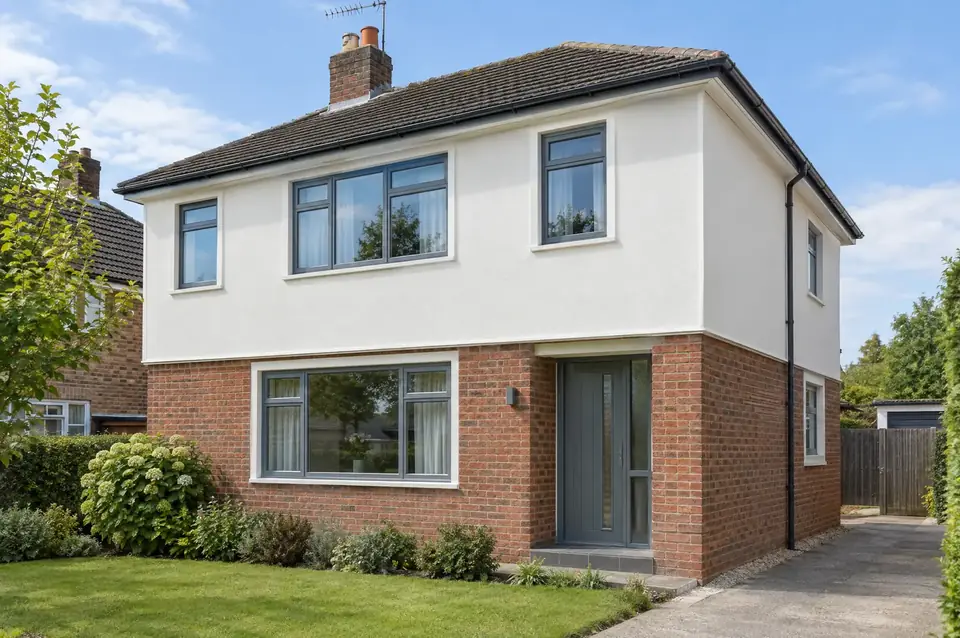
Render can make a tired or patched house look new, cover mismatched brickwork after an extension, and add a weatherproof skin to exposed walls. It also has to suit the wall behind it. Solid walls in older houses need a render that lets moisture out, and cracked or hollow old render needs taking back to sound material first. We look closely at the wall before recommending a system.
Re-rendering a whole elevation is also a building regulations matter, not just a cosmetic one. When you replace the render on more than half of a wall, the regulations can require the wall's insulation to be upgraded, which may mean external wall insulation under the new render. We'll explain how that applies to your house before you choose, and price the options side by side.
Which options suit your home?
Sand and cement render
The traditional two-coat render of sand, cement and lime or plasticiser, finished smooth or textured and then painted with masonry paint. It's the most affordable system and easy to patch. It needs repainting every several years, and on older solid walls a breathable, lime-based mix is often better than a hard cement render.
Silicone render
A thin-coat render applied over a base coat and mesh, with silicone added so rain beads off and dirt washes away. Silicone render is through-coloured, so it needs no painting, flexes slightly with the wall and lets moisture escape. It costs more than sand and cement but needs far less upkeep.
Through-coloured render (K Rend type)
Single-coat or two-coat renders coloured through their whole depth, sprayed or trowelled and then scraped to a textured finish. Brands such as K Rend are widely used on new and existing homes. They don't need painting and hide small marks well, though they're best on walls with consistent backgrounds.
Render repairs
Cutting out hollow, cracked or blown render, treating any cause such as a leaking gutter or failed bead, and patching to match. Exact colour and texture matches are hard on painted or weathered render, so a repaired wall may need repainting or a full re-coat to look even. We'll be honest about whether a patch will blend.
Insulated render (EWI)
External wall insulation boards fixed to the wall, with mesh, base coat and a silicone or acrylic top coat. It makes solid-walled homes warmer and is the usual way to meet building regulations when re-rendering more than half of an uninsulated wall. It thickens the wall, so window cills, pipes and the roof overhang need detailing.
What's included when SKJ does the work?
- Free survey of the walls, existing render, damp, cracks and details such as cills and pipes
- Scaffolding and protection of windows, doors, paths and planting
- Removal of loose or failed render back to a sound background
- Repairs to the background, including cracks, blown brick faces and bonding
- Stainless or PVC beads at corners, edges and the damp-proof course
- Base coat with reinforcing mesh where the system needs it
- Top coat in your chosen finish and colour
- Removal and refitting of downpipes, lights and satellite dishes, and full clean-up
How much does a rendering job cost?
Guide prices run from £40 to £160 per m². Silicone render with base coat and mesh over sound brickwork, including beads: typically £70 – £100 per m².
| Option | Guide price | Good to know |
|---|---|---|
| Sand and cement, painted | £40 – £65 per m² | Two-coat render plus masonry paint |
| Silicone or through-coloured render | £65 – £100 per m² | No painting, low maintenance |
| Insulated render (EWI) | £110 – £160 per m² | Insulation boards with a render finish |
Usually included: Survey, preparation of a sound background, beads, base coat and mesh where needed, top coat, masking and clean-up. Scaffolding is shown as its own line in your quote.
Usually extra: Scaffolding (typically £800–£2,500 for a house, priced separately), removal of large areas of old render, external wall insulation unless quoted, damp treatment, and planning fees in designated areas.
Guide ranges are the total a homeowner would expect to pay, including VAT where it applies. Your fixed price comes after a free survey.
What changes the price?
- Wall area and number of elevations
- Render system: sand and cement, silicone or through-coloured
- Removal of old render and repairs to the background
- Whether external wall insulation is needed to meet building regulations
- Scaffolding height and access, including over extensions and neighbours
- Detailing around windows, bays, pipes and meter boxes
How does the job run, start to finish?
- Survey and sampleWe look at every elevation, tap the old render to find hollow areas, check for damp and cracks, and note pipes, cills and vents. We'll show you colour and texture samples and explain whether building regulations apply to your wall.
- Quote and approvalsYour quote names the render system, the preparation, beads, colour and scaffolding. If you're re-rendering more than half of a wall, we explain the thermal upgrade options and building control route before you decide.
- Scaffold, protect and stripScaffolding goes up, windows and doors are masked, and fittings such as downpipes and lights come off. Loose or failed render is removed back to sound material, and any wall repairs are made.
- Beads and base coatsBeads are fixed at corners, edges, window reveals and the bell-cast above the damp-proof course. The base coat goes on, with mesh embedded where the system requires it, and is left to cure.
- Top coat and finishThe top coat is applied in suitable weather, avoiding frost, heavy rain and strong sun. Finishes are worked to an even texture, and drying times are respected before anything is refitted.
- Refit and hand overDownpipes, lights and other fittings are refitted, masking comes off windows and doors, the scaffolding comes down and paths are cleaned. You receive the building control certificate where the work was notified, plus the render manufacturer's guarantee paperwork.
Timescale: A typical semi takes 1–3 weeks to render, depending on preparation, curing times and weather.
Planning, Building Regulations and approvals
Does re-rendering need building regulations approval?
It can. Replacing render is renovation of a thermal element. Under regulation 23, where more than 50% of a wall's surface is renovated, or the work affects more than 25% of the whole building envelope, the wall should be brought up to current thermal standards, as long as that's technically, functionally and economically feasible. For a solid wall, Approved Document L's improved value is 0.30 W/m²K, which usually means external insulation. Some councils advise a lower trigger, so we confirm with building control before work starts.
Do I need planning permission to render my house?
Usually not, if your home isn't in a designated area and the finish is similar in appearance to the existing house. Changing from brick to render is a noticeable change, and in a conservation area, National Park or Area of Outstanding Natural Beauty you'll need planning permission before cladding or rendering. External wall insulation that thickens the wall may also need checking. Listed buildings need listed building consent, and flats need the freeholder's agreement.
Is render suitable for every wall?
No. Solid brick or stone walls in older houses need to let moisture out, so a hard, impermeable cement render can trap damp inside. Breathable systems, such as lime or silicone, are better on these walls. Render must also stop above the damp-proof course with a bell-cast bead, so it can't bridge the damp protection, and the cause of any damp must be fixed first.
Rendering: your questions answered
How much does it cost to render a house?
In the West Midlands, rendering typically costs around £40–£65 per m² for painted sand and cement and £65–£100 per m² for silicone or through-coloured render, plus scaffolding. For a three-bed semi with roughly 90–120 m² of wall, that usually means around £6,000–£12,000 for the render, with scaffolding on top. Removing old render or adding insulation increases the cost.
How long does rendering take?
A typical semi takes one to three weeks, depending on how much old render comes off, the system and the weather. Each coat needs time to cure, and render can't be applied in frost, heavy rain or very hot sun. We plan the programme around the forecast and tell you about any delays.
Will my house be disrupted while it's rendered?
Most of the work is outside, but there's scaffolding around the house, noise when old render is removed, and dust. Windows are masked during spraying and coating, which can make rooms darker for a few days. Downpipes and outside lights are removed temporarily and refitted at the end.
Can you render over my old render or pebbledash?
Sometimes. If the existing render is firmly bonded, some systems can go over it after cleaning and a key coat. Hollow, cracked or loose render must come off first, because new render won't hold a failing background. We tap-test the whole wall at survey and tell you which areas can stay.
What guarantee comes with new render?
The render system carries the manufacturer's guarantee, and the terms for your system are set out in your quote. Some manufacturers' guarantees depend on their full system and application method being used, which we follow. Keep the paperwork with any building control certificate for the work.
Do I need to repaint render?
Sand and cement render needs painting with masonry paint, and repainting every several years. Silicone and through-coloured renders don't need painting, because the colour runs through the material. They may need an occasional gentle clean, especially on north-facing or shaded walls where algae can grow.
Which areas do we cover for rendering?
We cover the whole West Midlands from West Bromwich. Pick your area for local details, councils and postcodes: