
Painting and decorating covers preparing and finishing the surfaces of your home: filling, sanding and painting walls, ceilings and woodwork inside, and masonry, render, timber and metalwork outside. Most of the quality is in the preparation, because paint only lasts as well as the surface beneath it. Decorating can also include wallpapering and lining paper.
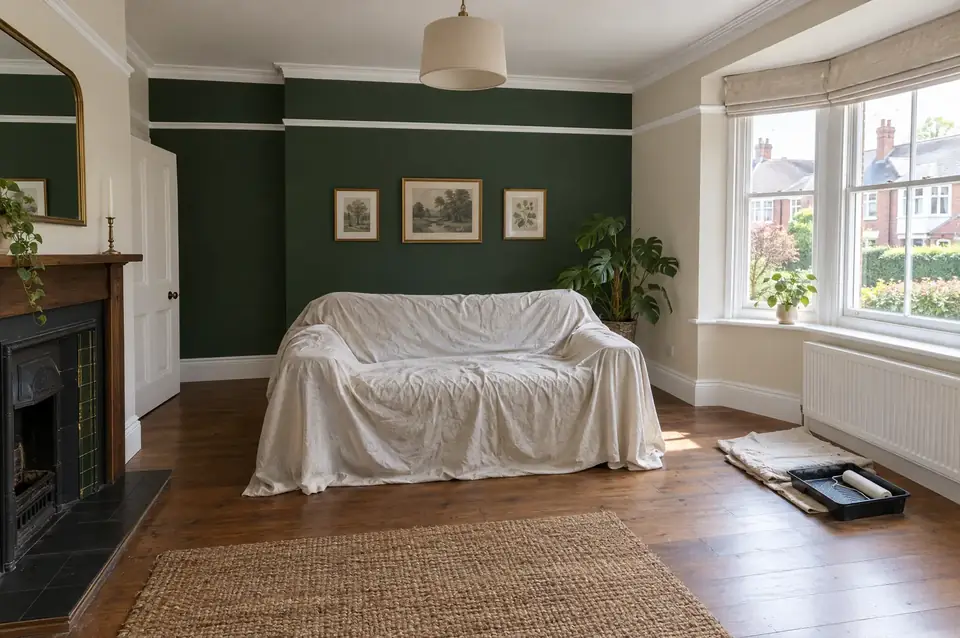
A good decorating job starts long before the first coat. Cracks are raked out and filled, flaky paint is scraped back, woodwork is sanded and primed, and stains are sealed so they don't bleed through. Skipping these steps is why some paint jobs look tired within a year. We price the preparation honestly, room by room, so you can see where the time goes.
Outside, paint protects as well as decorates. Masonry paint keeps rain out of render, and sound paint on windows, doors and bargeboards stops timber rotting. We check the condition of the surfaces first, and if repairs are needed before painting, such as loose render or rotten sills, we'll tell you. Weather matters too: exterior work is planned for dry spells, never in frost or rain.
Which options suit your home?
Interior walls and ceilings
Filling cracks and holes, sanding, sealing stains and applying two or more coats of emulsion. We'll suggest a finish to suit each room, such as matt for living rooms and wipeable or moisture-resistant paint for kitchens and bathrooms. Newly plastered walls get a mist coat first so the paint bonds properly.
Woodwork and doors
Skirting boards, architraves, doors, banisters and window boards are sanded, filled, primed where bare and finished in gloss, satin or eggshell. Water-based finishes dry faster and yellow less than oil-based ones. Getting woodwork right takes time, especially on older homes with many layers of paint.
Exterior masonry and render
Cleaning, treating algae, filling cracks and applying masonry paint to rendered or pebbledashed walls. A good masonry paint protects the wall and keeps its colour. Exterior work on two-storey houses may need ladders, towers or scaffolding, which we include in the quote so you're not surprised.
Exterior woodwork and metal
Fascias, bargeboards, timber windows, doors, gates and railings are scraped, sanded, repaired where needed, primed and painted. Rotten sections are cut out and spliced or filled before painting. Metal is wire-brushed and treated for rust. This work makes timber and metalwork last much longer.
Wallpaper and lining paper
Stripping old wallpaper, preparing the walls and hanging lining paper, plain or patterned paper, or feature walls. Lining paper can hide minor imperfections on older walls before painting. Patterned papers need careful setting out and matching, so the cost depends on the paper you choose.
What's included when SKJ does the work?
- Free survey of each room or elevation, with a written quote itemised by area
- Protection of floors, furniture, fittings and plants with sheets and masking
- Preparation: filling, sanding, scraping, sealing stains and priming bare surfaces
- Mist coat on new plaster before finishing coats
- Paint applied to the number of coats stated in your quote
- Woodwork prepared and finished in your chosen sheen
- Ladders, towers or scaffolding for exterior work, shown in the quote
- Clean-up at the end of each day and a final walk-round with you
How much does a painting and decorating job cost?
Guide prices run from £280 to £3,500 depending on size and specification. Double bedroom: walls and ceiling in two coats of emulsion, with skirting, door and frame: typically £380 – £600.
| Option | Guide price | Good to know |
|---|---|---|
| Single room interior | £280 – £600 | Walls and ceiling, two coats |
| Hall, stairs and landing | £650 – £1,200 | Including woodwork and spindles |
| Exterior of a semi | £1,200 – £3,500 | Masonry and woodwork, access included |
Usually included: Survey, protection, standard preparation, trade-quality paint in your chosen colours, the stated number of coats, clean-up and labelled spare paint.
Usually extra: Plastering or joinery repairs, wallpaper supply, specialist paints or finishes, moving very heavy furniture, and scaffolding for complex exterior access unless quoted.
Guide ranges are the total a homeowner would expect to pay, including VAT where it applies. Your fixed price comes after a free survey.
What changes the price?
- Number and size of rooms or elevations
- Condition of surfaces and amount of preparation needed
- Ceiling height, stairwells and exterior access
- Paint type and finish, including specialist or premium paints
- Amount of woodwork, such as doors, skirtings, spindles and windows
- Colour changes, especially dark to light, which need extra coats
How does the job run, start to finish?
- Survey and colour choiceWe look at each room or wall, note cracks, stains, damp marks and the state of the woodwork, and talk through colours and finishes. For exterior work, we check for loose render, rot and rust that need fixing first.
- Itemised quoteYour quote lists each room or elevation, the preparation, the paint type and the number of coats. If repairs such as plastering or joinery are needed, they're shown separately so you can decide.
- Protect and prepareFurniture is moved and covered, floors are sheeted and edges are masked. Then the preparation: filling, sanding, scraping, sealing stains and priming. On older homes, we take care with old paint layers, which may contain lead.
- PaintCeilings first, then walls, then woodwork, with each coat left to dry properly before the next. Exterior work follows the weather, so it's done when surfaces are dry and the temperature suits the paint.
- Final check and tidyWe walk round with you to check every surface, touch up anything missed and clean up thoroughly. Spare paint is left labelled with the room or wall, so you can do small touch-ups later.
Timescale: A single room usually takes 1–3 days; the exterior of a semi usually takes 3–7 dry days.
Planning, Building Regulations and approvals
Is old paint in my home a risk when decorating?
It can be. Homes built before the 1960s may have lead-based paint in their older layers, especially on woodwork, doors and windows. Lead paint is safe if it's sound and left in place, but dry sanding and burning it off release harmful dust and fumes. We use safer methods, such as wet abrading or chemical strippers, and keep children and pregnant women away from the work area until it's cleaned up.
Does exterior painting need planning permission?
Not usually. Repainting or changing the colour of your house is normally allowed without an application. The exceptions are listed buildings, which may need listed building consent for colour changes, and homes in conservation areas or under an Article 4 direction, where painting previously unpainted brick or changing colours on the front may be controlled. Leaseholders may also need the freeholder's permission.
Painting and decorating: your questions answered
How much does it cost to decorate a room?
In the West Midlands, painting the walls and ceiling of a double bedroom with the skirting, door and frame usually costs around £380–£600, including paint. A hall, stairs and landing typically costs £650–£1,200 because of the height and woodwork. Rooms in poor condition need more preparation and cost more.
How much does it cost to paint the outside of a house?
For a typical semi, painting rendered walls and exterior woodwork usually costs around £1,200–£3,500 in the West Midlands, depending on the condition of the surfaces, the amount of woodwork and whether scaffolding is needed. Terraces with front elevations only cost less. Repairs to render or timber are priced separately.
How long does decorating take?
A single room usually takes one to three days, depending on preparation and drying times between coats. A whole interior can take one to two weeks. Exterior painting needs dry weather and suitable temperatures, so a semi might take three to seven working days spread over a dry spell.
Can I stay in the house while you decorate?
Yes. We work room by room, so most of the house stays usable. Rooms being painted need clearing of small items and furniture moved to the middle. Water-based paints have little smell, but we'll keep rooms ventilated, and you may want to keep pets away while paint dries.
What guarantee comes with decorating?
Paints carry their manufacturers' terms, which are set out in your quote. How long a finish lasts depends on the surface, the room's use and, outside, the exposure to weather. If anything isn't right at the final walk-round, we put it right before we finish.
Should I buy the paint myself?
You can, but we usually supply trade-quality paint, which covers better and lasts longer than many retail ranges. If you've chosen a particular brand or colour, tell us at survey and we'll price it in. Either way, the quote shows the paint type and the number of coats.
Which areas do we cover for painting and decorating?
We cover the whole West Midlands from West Bromwich. Pick your area for local details, councils and postcodes:
- Painting and decorating in Sandwell
- Painting and decorating in Birmingham
- Painting and decorating in Dudley
- Painting and decorating in Walsall
- Painting and decorating in Wolverhampton
- Painting and decorating in Solihull
- Painting and decorating in Coventry
- Painting and decorating in Staffordshire
- Painting and decorating in Worcestershire
- Painting and decorating in Warwickshire