
A uPVC window is a double- or triple-glazed window with a frame made from rigid PVC, reinforced with steel or aluminium where needed. Replacing one means taking out the whole old frame and fitting a new, made-to-measure unit that meets today's energy, ventilation and safety rules. Most homes in England now have uPVC because it needs little upkeep and is good value.
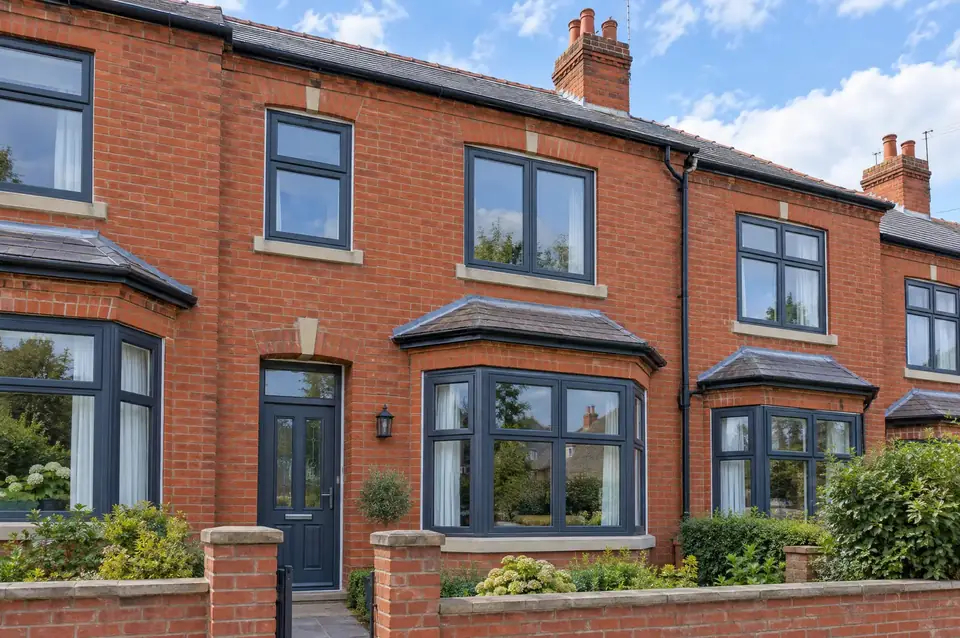
New windows are one of the few home improvements you notice every single day: fewer draughts, less condensation on the glass, quieter rooms and locks that actually work. If your current frames are misted between the panes, sticking, rotting or simply old double glazing from the 1980s or 90s, a straight swap is usually the simplest fix. We measure every opening ourselves, so each frame is built to size rather than forced to fit.
uPVC suits most house types, from Victorian terraces to post-war semis and newer estates. White is the cheapest finish, while foiled colours such as anthracite grey, black and woodgrain cost a little more and can suit older brick. If you live in a flat, a listed building or a conservation area, there may be extra rules on how windows look, and we check those before you order anything.
Which options suit your home?
Casement windows
The standard side-hung or top-hung window found in most UK homes. Casements are the simplest and cheapest to make, open wide for airing and cleaning, and can be set up as fire escape windows on upper floors. They come in white, colours and woodgrain finishes, with chamfered or sculptured frame profiles to suit the age of the house.
Flush sash casements
A casement where the opening sash sits level with the outer frame instead of overlapping it, copying the look of traditional timber joinery. Flush frames cost more than standard casements but suit period terraces and cottages well, especially in heritage colours with traditional-style hinges and monkey-tail or pear-drop handles.
Tilt-and-turn windows
One handle lets the window tilt inwards at the top for secure ventilation, or swing fully open like a door. Tilt-and-turn suits flats, upstairs rooms and wide openings where you want easy cleaning from inside. The frames are sturdy, lock at several points around the sash and can be specified to meet fire escape sizes.
Vertical sliding sash windows
uPVC sliding sashes reproduce the look of Victorian and Edwardian box sashes without the rattles, draughts and repainting. They use spiral balances instead of weights, tilt inwards for cleaning and can include decorative horns and astragal bars. They cost noticeably more than casements but keep the character of a period front.
Bay and bow windows
Bays are three or more windows set at angles; bows are a gentle curve of four or five. Replacement bays are built with structural bay poles or posts so the window doesn't carry the load of the brickwork or roof above. We check whether the existing bay is load-bearing before quoting, because that changes how it's supported during the swap.
What's included when SKJ does the work?
- Free home survey, with every opening measured by us rather than estimated
- Removal and disposal of old frames and glass
- Made-to-measure double-glazed frames meeting current Part L limits (U-value of 1.4 W/m²K or better, or Window Energy Rating band B)
- Trickle vents where the rules require them, sized for each room
- Toughened or laminated safety glass in low-level and other critical locations
- Upstairs escape openings kept at least as good as the windows they replace
- Internal and external making good, with trims, cills and silicone finished neatly
- Building regulations certification, with the route named in your quote
How much does a uPVC window cost?
Guide prices run from £380 to £2,600 per window. Standard white casement, about 1,200 × 1,200 mm, with trickle vent and old frame removed: typically £420 – £640 per window.
| Option | Guide price | Good to know |
|---|---|---|
| White casement window | £380 – £650 per window | Standard size, white frame, double glazed |
| Coloured or flush casement | £520 – £950 per window | Foiled colours, woodgrain or flush sash frames |
| Bay or bow window | £1,300 – £2,600 per window | Three to five panes, with structural bay supports |
Usually included: Survey and measure, made-to-measure frame with A-rated double glazing, trickle vents, removal and disposal of the old window, fitting, internal trims, external sealing and building regulations certification.
Usually extra: Scaffolding where a tower isn't enough, replacing failed lintels or rotten sub-cills, plastering or redecorating beyond the window reveal, blinds, and planning or listed building fees where they apply.
Guide ranges are the total a homeowner would expect to pay, including VAT where it applies. Your fixed price comes after a free survey.
What changes the price?
- Number and size of windows, and how many sashes open
- Frame style: casement, flush sash, tilt-and-turn, vertical slider or bay
- Colour and finish: white is cheapest, foiled colours and woodgrain add cost
- Glass upgrades such as triple glazing, acoustic, obscure or decorative glass
- Access for upstairs windows, including whether a tower or scaffold is needed
- Repairs found when old frames come out, such as a failed lintel or bay support
How does the job run, start to finish?
- Free survey and measureWe visit, look at each window from inside and out, check the brickwork and lintels above, and measure each opening. We'll talk through styles, colours, glass and handles, and flag anything that affects the rules, such as escape windows or missing vents.
- Written quote and specificationYou get a written quote listing each window, its style, glass, colour, vents and hardware, plus how the installation will be certified. It's a fixed price for the agreed specification, and any change you ask for later is priced in writing first.
- Check measure and manufactureBefore ordering, we re-check sizes against the final design so nothing is guessed. Frames are then made to order, which usually takes a few weeks. We'll give you a fitting date once delivery is confirmed by the manufacturer.
- Fitting dayWe protect floors and furniture, then work one window at a time so the house is never left open. Old frames come out, new frames go in on packers and fixings, and each one is sealed before we move on to the next.
- Finishing and checksTrims, cills and silicone are finished inside and out. We adjust every sash so it closes evenly, test the locks and vents, and show you how the handles, tilt settings and child restrictors work.
- PaperworkYou receive the building regulations certificate for the installation and the manufacturer's guarantee documents. Keep them with your house deeds, because a buyer's solicitor will ask for the certificate when you sell.
Timescale: Usually 1–2 days on site for a typical house, after about 4–6 weeks for the frames to be made.
Planning, Building Regulations and approvals
Do replacement windows need building regulations approval?
Yes. Since 2002, replacing a whole window (the frame and opening parts) in England has been controlled work under the Building Regulations; replacing only the glass or repairing a rotten sash isn't. The installation must either be self-certified by an installer registered with a competent person scheme such as FENSA or CERTASS, or be notified to building control before work starts. Either way, you should receive a certificate at the end. Your quote states which route will be used for your windows.
How energy efficient do new windows have to be?
Approved Document L sets a limit for replacement windows in existing homes: a whole-window U-value of no more than 1.4 W/m²K, or a Window Energy Rating of band B or better. The new window also shouldn't perform worse than the one it replaces. Most A-rated uPVC double glazing meets this comfortably, but we confirm the rating for your exact frames in the written specification. Triple glazing goes further, at extra cost and weight.
Do new windows need trickle vents?
Usually. Approved Document F (2021) says replacement windows must not leave a home with worse ventilation than before. If your old windows had trickle vents, the new ones need vents at least as big. If they didn't, vents are normally added unless the room is already ventilated another way, such as a suitable wall vent or continuous mechanical extract. Typical targets are 8,000 mm² equivalent area for habitable rooms and kitchens, and 4,000 mm² for bathrooms.
What about fire escape windows and safety glass?
Upstairs windows that serve as escape routes should have a clear opening of at least 0.33 m², at least 450 mm wide and 450 mm high, with the bottom of the opening no more than 1,100 mm above the floor. A replacement mustn't be worse than the window it replaces. Under Approved Document K, glass within 800 mm of the floor, and glass in or within 300 mm of a door up to 1,500 mm high, must be toughened or laminated safety glass.
uPVC windows: your questions answered
How much do new uPVC windows cost for a three-bed semi?
Most three-bed semis have eight to ten windows, and replacing them all in white uPVC typically costs around £3,800–£6,500 in total in the West Midlands, including fitting and removal of the old frames. A bay window, colour finishes or tilt-and-turn sashes push it higher. We price each window separately in your quote, so you can see exactly where the money goes and phase the work if you'd prefer.
How long does it take to replace the windows in a house?
Fitting usually takes one to two days for a typical house, working one opening at a time. The longer wait is manufacture: frames are made to measure after the survey, which normally takes four to six weeks. Bay windows or a large number of frames can add an extra day on site.
Will fitting new windows make a mess?
There's some dust when old frames come out, mainly around each opening, so we sheet floors and cover furniture near every window. Each window is removed, replaced and sealed before the next one starts, so rooms aren't left open to the weather. Plaster at the reveal can sometimes crack; minor making good is included, and anything larger is discussed before we do it.
Do I need planning permission for replacement windows?
Not usually. Replacing windows in a house with ones of similar appearance is normally permitted development. You may need permission if you live in a flat, in a listed building, or where an Article 4 direction controls the look of windows, which is common in conservation areas. Leaseholders may also need the freeholder's consent before changing windows.
What guarantee comes with new windows?
Frames, glass and hardware are covered by the manufacturer's guarantee, and the terms for your specific windows are set out in your quote. Ask what's covered for sealed units misting up, hinges and locks, as these differ between suppliers. Keep the guarantee paperwork with your building regulations certificate, because both are useful when you come to sell.
What do I need to do before fitting day?
Clear window sills and move furniture, ornaments and curtains about a metre back from each window. Take down blinds and curtain poles if they're fixed to the frame or reveal. Make sure there's parking or space for the van and frames, and tell us about alarms with sensors on the windows so they can be refitted.
Which areas do we cover for uPVC windows?
We cover the whole West Midlands from West Bromwich. Pick your area for local details, councils and postcodes: